Atomic Habits Summary for Beginners
Atomic Habits Summary for Beginners: How Small Changes Create Big Results
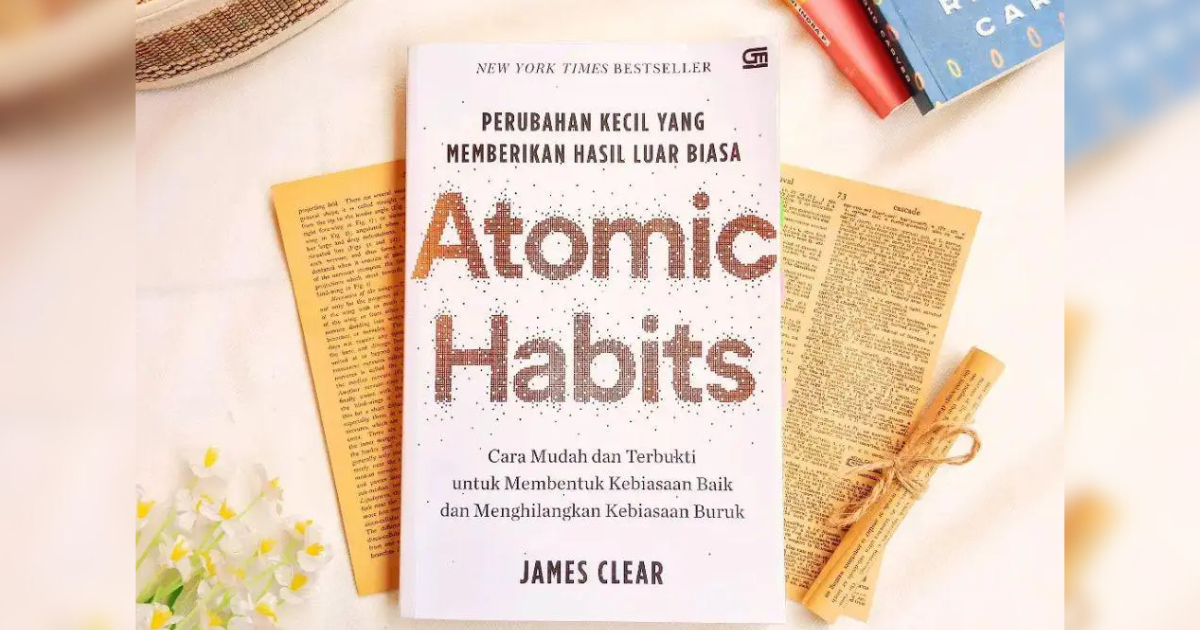
Building better habits doesn’t require massive motivation or extreme discipline. According to Atomic Habits by James Clear, the secret to long-term success lies in small, consistent actions done every day.
In this beginner-friendly summary, you’ll discover the core ideas of Atomic Habits, explained simply, with practical examples you can apply immediately — even if you feel stuck, unmotivated, or overwhelmed.
What Is Atomic Habits About?
Atomic Habits is a book about how tiny habits, when repeated consistently, can lead to remarkable results over time.
The word atomic has two meanings:
- Tiny (small habits)
- Powerful (small actions that create massive change)
James Clear’s main message is simple:
You do not rise to the level of your goals.
You fall to the level of your systems.
In other words, success is not about goals — it’s about habits.
Why This Book Is Perfect for Beginners
Many self-improvement books focus on motivation and willpower. Atomic Habits is different because it focuses on:
- Systems instead of motivation
- Environment instead of willpower
- Identity instead of outcomes
That’s why beginners love it:
You don’t need to change your whole life overnight — just 1% at a time.
The Power of Small Habits (The 1% Rule)
One of the most important ideas in Atomic Habits is the 1% improvement rule.
If you improve just 1% every day, those small gains compound over time.
At first, progress feels invisible. But after weeks and months, the results become impossible to ignore.
This is called the plateau of latent potential:
- People quit because they don’t see results
- But progress is happening beneath the surface
👉 Consistency beats intensity.
The Real Goal: Identity-Based Habits
Most people focus on outcome-based habits:
- “I want to lose weight”
- “I want to be productive”
- “I want to wake up early”
James Clear suggests a better approach: identity-based habits.
Instead of asking:
“What do I want to achieve?”
Ask:
“Who do I want to become?”
Examples:
- “I am a healthy person”
- “I am someone who shows up daily”
- “I am disciplined with my time”
Every small habit becomes a vote for your new identity.
The 4 Laws of Behavior Change (Simple System)
The book introduces a simple framework to build good habits and break bad ones.
1️⃣ Make It Obvious
Good habits fail when they’re invisible.
How to apply this:
- Prepare your environment
- Put cues where you can see them
Examples:
- Put your book on your desk
- Lay out workout clothes the night before
- Place a water bottle on your table
👉 Design your environment to support your habits.
2️⃣ Make It Attractive
We repeat habits that feel rewarding.
How to apply this:
- Pair habits with something enjoyable
- Use temptation bundling
Example:
- Listen to your favorite podcast only while walking
- Drink good coffee while planning your day
👉 The more attractive the habit, the easier it sticks.
3️⃣ Make It Easy
Most people fail because they try to do too much, too fast.
Rule:
Start small — ridiculously small.
Examples:
- Read 1 page
- Do 2 push-ups
- Write 1 sentence
This removes resistance and builds momentum.
👉 Standardize before you optimize.
4️⃣ Make It Satisfying
Habits stick when they feel rewarding.
How to apply this:
- Track your habits
- Celebrate small wins
- Use visual progress (checklists, streaks)
Seeing progress reinforces behavior.
👉 What gets rewarded gets repeated.
How to Break Bad Habits (Reverse the Laws)
To break bad habits, invert the system:
- Make it invisible
- Make it unattractive
- Make it difficult
- Make it unsatisfying
Example:
- Remove junk food from your house
- Add friction (delete apps, block sites)
- Create consequences
Why Motivation Is Overrated
One of the most powerful lessons in Atomic Habits is this:
You don’t need more motivation — you need better systems.
Motivation comes and goes.
Habits remain.
When your environment is designed well, good behavior becomes automatic.
Common Beginner Mistakes (And How to Avoid Them)
❌ Trying to change everything at once
❌ Relying only on motivation
❌ Setting goals without systems
❌ Quitting too early
✅ Focus on small habits
✅ Build identity-based habits
✅ Track progress
✅ Be patient and consistent
How to Start Today (Beginner Action Plan)
Here’s a simple way to apply Atomic Habits immediately:
- Choose one habit
- Make it small
- Attach it to an existing routine
- Track it daily
- Focus on consistency, not perfection
Example:
After brushing my teeth, I will read one page.
That’s it.
Final Thoughts: Why Atomic Habits Works
Atomic Habits works because it’s realistic.
It doesn’t ask you to:
- Wake up at 5 AM
- Be motivated all the time
- Change your life overnight
Instead, it teaches you how to:
- Build systems
- Shape your identity
- Improve consistently
Small habits.
Big results.
Long-term change.
👉 Want more simple systems like this?
Visit https://nextlevelroutine.com
and start building habits that actually stick.